
Thursday, 26 November 2026 · Evening edition · Kampala, Uganda
The November 26 evening edition covers proposed US tariffs, food and fuel costs, and what Visa’s Kampala office could mean for Ugandan merchants.
01. Finance & global trade
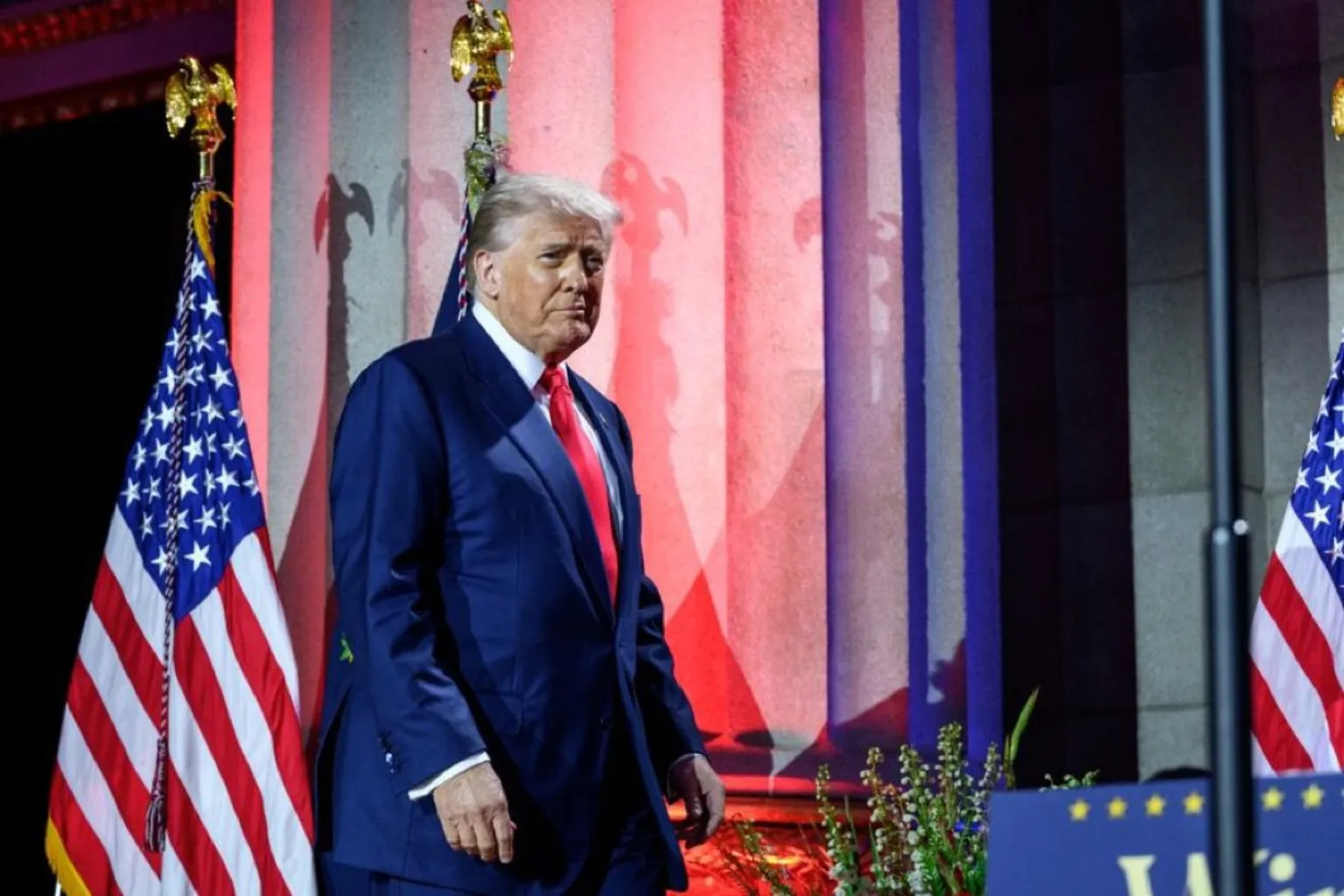
Trump opens a new front in the global trade war
Washington's proposed tariffs threaten to reshape international commerce, raising questions about inflation, consumer spending and the future of US–China relations.
On November 25 the US Trade Representative proposed tariffs covering 14 trading partners after investigations into excess manufacturing capacity. The proposal was open for comment.
The measures represent a renewed attempt to reshape global manufacturing and reduce American dependence on China. However, they also risk increasing costs for American businesses and households.
Reuters reported today that Washington intends to increase pressure on trading partners, including the European Union, Japan and Vietnam, to reconsider their economic relationships with Beijing.
China has rejected Washington's accusations of unfair economic practices, although Reuters reports that Beijing has not yet threatened retaliation.
The central question is whether tariffs will encourage domestic manufacturing or simply make imported products more expensive. Supporters argue that they protect American industry; critics contend that they undermine purchasing power and international trade.
What it means for Africa: Smaller economies could face indirect consequences through higher import costs, changing exchange rates and shifts in international supply chains. However, countries positioned as alternative manufacturing and sourcing destinations could also discover new commercial opportunities.
Inflation returns to the centre of economic debate
US consumer prices, measured by the personal consumption expenditures index, rose 3.8% in October from a year earlier. In a separate release, the Bureau of Economic Analysis estimated that real GDP grew at a 4.3% annualised rate in the third quarter.
Strong economic growth alongside persistent inflation presents a difficult challenge for the Federal Reserve. Raising interest rates could contain price increases but make borrowing more expensive. Lowering rates prematurely could reignite inflation.
For emerging economies, prolonged high US interest rates can raise the cost of servicing dollar-denominated debt.
US Bureau of Economic Analysis on October prices · US Bureau of Economic Analysis on third-quarter GDP
02. Geopolitics & international affairs
Washington and NATO increase diplomatic pressure on Moscow
The future of European security remains uncertain as diplomatic efforts to end the Russia–Ukraine war continue.
After meeting in Florida, President Donald Trump and NATO Secretary-General Mark Rutte urged Russia to avoid actions that could widen its war in Ukraine. Reuters reported the joint statement on November 26.
The challenge facing Washington is balancing its ambition to end the war with Europe's concerns about sovereignty, territorial security and the credibility of future defence agreements.
A durable settlement could improve global energy stability and investor confidence. An unsuccessful diplomatic process, however, could prolong economic uncertainty and military expenditure across Europe.
Reuters on the US–NATO statement
New Zealand faces political uncertainty after its election
At the close of the November 26 edition, New Zealand was awaiting the final count from its November 7 election. The Electoral Commission published the official results on November 27.
The inconclusive preliminary outcome has increased the importance of smaller political parties. Coalition negotiations could extend into 2027, depending on the final allocation of parliamentary seats and possible recounts.
The political situation illustrates how coalition governments increasingly depend on negotiation and compromise rather than outright electoral dominance.
New Zealand Electoral Commission
03. White House & congressional politics
Could universal healthcare become TrumpCare?
An unlikely political conversation could reopen America's longstanding debate over healthcare reform.
According to Remillard's newsletter, President Donald Trump has expressed willingness to meet Michigan Democratic Senator-elect Abdul El-Sayed to discuss a universal healthcare proposal.
El-Sayed has floated the idea of branding a government-funded healthcare system as TrumpCare, potentially using the president's appetite for political legacy to advance a progressive policy.
The proposal would fundamentally reconsider how Americans receive medical coverage, making publicly funded healthcare available broadly rather than restricting Medicare primarily to older citizens and certain eligible groups.
Supporters of universal healthcare argue that it could reduce financial hardship and expand access. Opponents raise concerns about taxation, government expenditure and the transition away from existing insurance arrangements.
Crucially, Trump's willingness to hold a meeting does not constitute an endorsement, and a reform of this magnitude would face significant congressional challenges.
Lisa Remillard’s November 25 FactsHQ briefing
Iowa receives the all-clear, but environmental questions remain
The US Army's controlled disposal operation at an ammunition facility in Iowa has concluded, with federal authorities reportedly lifting restrictions on nearby residents.
Federal officials reported that initial downwind air monitoring found no lead detections of concern. That assessment describes the air samples taken after the operation.
Beyond the political dispute, the priority remains protecting residents and ensuring that any environmental contamination is identified and addressed.
04. Financial markets
Global stocks recover as investors digest tariff proposals
European and Asian equities advanced on Thursday as investors reassessed the likely economic impact of Washington's latest trade measures.
Meanwhile, uncertainty surrounding artificial intelligence investments continues to weigh on technology valuations. Investors are increasingly questioning whether enormous expenditure on AI infrastructure will generate sufficient financial returns.
Associated Press market report
US exchanges were closed for Thanksgiving. Japan’s Nikkei 225 ended Thursday 0.9% higher, according to the Associated Press.
Middle Eastern tensions push oil towards $100
Renewed security concerns across the Middle East are threatening the stability of global energy supplies.
Yemen's Houthis claimed responsibility for attacks targeting Saudi energy infrastructure, while Iranian authorities reported maritime incidents in the Strait of Hormuz.
Brent crude settled at $96.57 a barrel on Thursday, Reuters reported.
For East African economies, including Uganda, sustained increases in crude oil prices could eventually translate into more expensive transportation, electricity generation, agricultural distribution and imported commodities.
Reuters on Thursday’s oil settlement
05. Technology & artificial intelligence
The AI revolution faces a financial reality check
The global technology industry is confronting a difficult question: can the extraordinary capital invested in artificial intelligence deliver equally extraordinary profits?
According to Reuters, credit-rating agency S&P has placed Nvidia's credit rating under review for a possible downgrade amid concerns about corporate governance. Meanwhile, Washington continues to debate restrictions on China's access to advanced semiconductor technology.
The semiconductor industry increasingly sits at the intersection of national security, economic competition and technological sovereignty.
Artificial intelligence is no longer simply a competition between technology companies. It is becoming a competition between nations over who controls the infrastructure of the digital economy.
The next phase of the AI industry may be defined less by ambitious promises and more by measurable profitability, operational efficiency and genuine commercial adoption.
Reuters on Nvidia’s credit outlook · Luuluno’s reinstatement report
06. Lifestyle, culture & entertainment
A century-old American tradition interrupted by extreme weather
Severe weather forced organisers to postpone the 100th Macy’s Thanksgiving Day Parade in New York.
The centenary celebration, originally scheduled for today, has been moved to Saturday, November 28, according to Remillard's newsletter.
Authorities cited dangerous winds, heavy rainfall and coastal flooding as reasons for rescheduling the event. Reuters independently reported the postponement.
The disruption serves as a reminder of the economic and logistical vulnerability of major cultural events to extreme weather, particularly those involving enormous crowds, international visitors and live television production.
Associated Press on the parade postponement
Thanksgiving becomes more expensive for American families
The American Farm Bureau Federation put the cost of a traditional Thanksgiving meal for ten at $58.63 in its annual survey.
Retailers are simultaneously preparing aggressive Black Friday discounts to attract increasingly price-conscious shoppers.
The tension between consumer demand and household affordability could make this festive shopping season an important indicator of economic confidence heading into 2027.
American Farm Bureau Federation survey
Ezra Frech challenges expectations in entertainment
Paralympic gold medallist Ezra Frech and professional dancer Daniella Karagach won the season 35 finale of Dancing with the Stars on November 24, ABC News reported.
His reported victory represents a significant moment for disability representation in mainstream entertainment, challenging conventional perceptions of athleticism, artistic expression and physical ability.
07. Uganda & African business
Visa expands its presence in Uganda's digital economy
Visa opened an office in Kampala on November 26, according to the Nile Post.
According to Nile Post, the global payments company is expanding its presence in Uganda as part of efforts to support the development of a cashless economy.
The development could have significant implications for financial technology companies, banks, online merchants, digital platforms and entrepreneurs operating across East Africa.
Uganda's digital payment ecosystem has historically been dominated by mobile money. Greater participation from international payment networks could create opportunities for closer integration between mobile wallets, banking infrastructure and international commerce.
For the creative economy, this could eventually support better monetisation systems, digital subscriptions, international royalty payments and cross-border transactions.
However, such opportunities will depend on transaction costs, accessibility, interoperability and regulatory cooperation.
Nile Post on the Kampala office opening
08. The editorial
The world is entering an era of economic sovereignty
Analysis and opinion
From American tariffs and Chinese industrial competition to Middle Eastern energy insecurity and African digital transformation, today's developments reveal a broader structural change in the global economy.
Countries are increasingly prioritising control over strategic resources, technology, manufacturing and financial infrastructure.
For Africa, this presents both a challenge and an opportunity. The continent risks remaining dependent on external systems, yet it also possesses the demographic, entrepreneurial and cultural potential to develop competitive industries of its own.
The strategic opportunity is not merely to consume foreign technology, but to build intellectual property, develop local digital infrastructure, strengthen institutions and participate in international markets as producers.
The countries that succeed in the coming decade may be those capable of combining technological innovation with economic independence and effective international partnerships.