Friday, 27 November 2026 · Early morning edition · 3:57 AM EAT
The November 27 morning edition examines Nvidia’s leadership reversal, a clash over congressional oversight, and how holiday spending reaches retailers, publishers and performers.
This edition draws on Lisa Remillard’s FactsHQ newsletters and public reporting, with analysis of the implications for Uganda.
I. Finance, economics & Wall Street
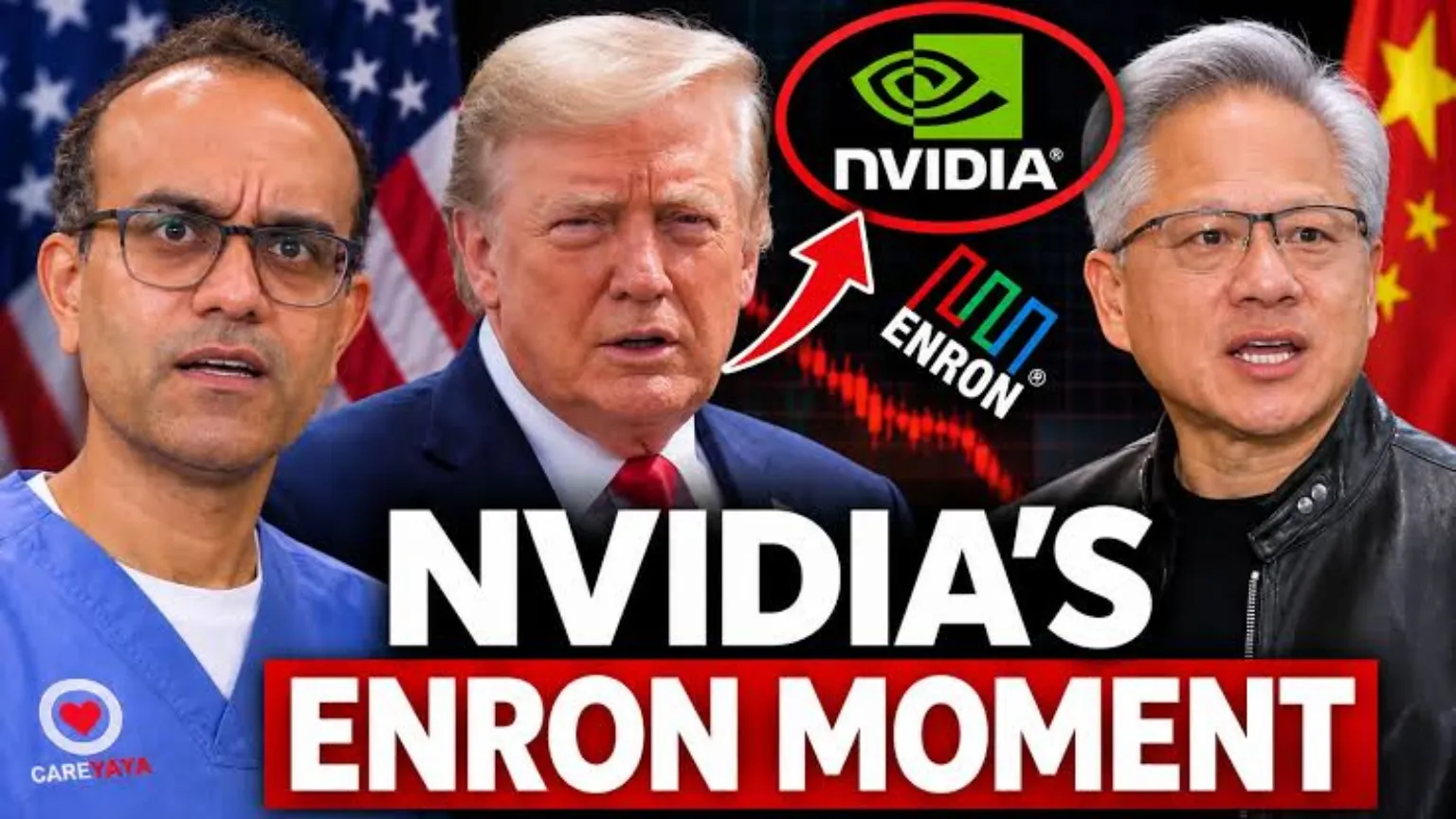
The return of Jensen Huang: When corporate power becomes a matter of national security
The extraordinary intervention of an American president in the leadership of one of the world's most influential technology companies raises serious questions about corporate independence, political influence and financial stability.
The return of Jensen Huang to Nvidia has become considerably more than a corporate leadership story. It is emerging as a test of the relationship between Washington, Silicon Valley and the global capital markets.
Huang's reinstatement followed his resignation on November 12. President Donald Trump subsequently acknowledged intervening in discussions surrounding his return.
Reuters reported on November 25 that the US Justice Department had not opened a formal investigation into Huang himself before the administration supported his reinstatement. Its assessment drew on information already available to investigators.
Reuters on the federal assessment · Luuluno’s reinstatement report
Why Washington is so concerned
Nvidia occupies an unusually important position within the global economy. Its semiconductor technology supports artificial intelligence, scientific research, cloud computing, autonomous systems and advanced industrial development.
The geopolitical significance of its products means that decisions taken inside Nvidia's boardroom can have consequences far beyond its shareholders.
For Washington, the central concern is whether advanced American computing technology could strengthen China's strategic capabilities. For Nvidia, the challenge is preserving access to lucrative international markets while complying with American national-security restrictions.
The controversy therefore involves three overlapping questions: whether corporate governance procedures were sufficiently independent, whether national-security assessments were adequate, and whether presidential involvement in corporate leadership decisions establishes a problematic precedent.
None of these questions, by themselves, establishes criminal wrongdoing.
Wall Street's extraordinary reaction
Shares in Nvidia and other companies tied to AI infrastructure rallied on November 23 following the reinstatement announcement.
The rally demonstrates how deeply artificial intelligence has become embedded in the financial system.
The consequences extend to pension funds, retirement accounts, institutional investors, semiconductor manufacturers, electricity providers and construction companies involved in data-centre development.
Yet a strong rebound does not necessarily mean that the underlying problems have disappeared.
Has artificial intelligence created a financial bubble?
The answer requires distinguishing between technological value and financial valuation.
Artificial intelligence can be genuinely transformative while companies associated with it remain excessively expensive. Those are not contradictory possibilities.
The historical experience of the internet illustrates this distinction. The internet ultimately transformed commerce and society, but numerous companies associated with the dot-com boom failed because their valuations were disconnected from sustainable revenues.
Another source of concern is interconnected financing. Chip suppliers, infrastructure providers and AI developers increasingly invest in one another, potentially creating dependencies that become dangerous when access to capital weakens.
If AI developers struggle to generate sufficient income, their demand for computing infrastructure could weaken. That would affect chip manufacturers, data-centre operators, electricity suppliers and lenders.
The coming congressional scrutiny of Nvidia is therefore not simply an investigation into one executive. It could help define the institutional rules governing America's most strategically important emerging industry.
The global markets report
Nvidia shares closed Wednesday at $149.30. US exchanges were closed for Thanksgiving on Thursday, when shares rose in Asia and Europe. Brent crude settled Thursday at $96.57 a barrel.
Reuters on Thursday’s oil settlement · Associated Press market report
II. Geopolitics & international relations
Trump versus China: The battle to control the architecture of global trade
Washington's latest tariff offensive is about much more than the balance of imports and exports. It is about determining which country will exercise the greatest influence over the industrial economy of the twenty-first century.
President Donald Trump's administration is pursuing additional trade restrictions affecting 14 major trading partners.
The proposed measures, highlighted in Lisa Remillard's November 25 newsletter, follow a prolonged dispute over America's industrial competitiveness and China's manufacturing influence.
Reuters reports that Washington wants important economic partners to reduce their commercial dependence on Beijing. China has disputed American accusations of unfair competition.
Understanding China's economic power
China's position within international commerce is not simply the result of inexpensive labour.
Over several decades, the country developed interconnected manufacturing networks, transportation infrastructure, technical expertise, industrial financing and enormous production capacity.
A company manufacturing electronics in China can often access component suppliers, specialised labour, packaging companies and international shipping services within a relatively concentrated industrial ecosystem.
Reproducing these networks elsewhere requires years of capital investment.
American trade policy increasingly seeks to encourage that process by making excessive dependence on Chinese production more expensive or strategically unattractive.
Why tariffs can become politically dangerous
Tariffs are generally collected from importers when goods enter a country. Foreign producers do not automatically bear the entire cost.
Depending on commercial conditions, the additional expense can be absorbed by suppliers, importers, retailers or ultimately consumers.
That creates a political contradiction. A government seeking to protect domestic industries may simultaneously raise the living costs of the households it promises to defend.
The challenge becomes especially acute when economic growth is accompanied by persistent inflation.
Where does Africa stand?
For Uganda and other African economies, the competition between Washington and Beijing creates a complicated strategic environment.
China remains an important source of manufactured goods, infrastructure financing and industrial equipment. Western economies remain significant sources of investment, development finance, technology and export demand.
African countries have legitimate reasons to maintain constructive relationships with both.
The larger opportunity is to develop domestic production capacity rather than remaining exclusively dependent upon imported finished products.
Agricultural processing, renewable energy, software development, mineral processing and creative intellectual property represent possible areas of economic diversification.
The danger is that African economies become passive participants in a commercial struggle designed primarily around the interests of larger powers.
The Middle East and the fragile economics of energy security
Renewed concerns about Saudi energy infrastructure have supported international oil prices. Reuters reported that Yemen's Houthis claimed responsibility for an attack on a major Saudi refinery. The claim should be distinguished from independently established damage or disruption.
The possibility of interruptions to Middle Eastern energy supplies remains a significant source of uncertainty for financial markets.
When traders anticipate disruptions, oil prices can rise before any sustained shortage actually materialises.
For petroleum-importing countries, this creates an economic chain reaction.
Transport companies face higher operating costs. Agricultural products become more expensive to distribute. Manufacturers experience increased production expenses. Airlines face higher fuel bills, while households lose purchasing power.
Uganda is particularly exposed to international petroleum prices because imported fuel must travel considerable distances through regional supply networks.
A prolonged energy shock could also increase demand for foreign currency, adding pressure to the cost of imports.
The economic significance of the Middle East therefore extends far beyond the region itself.
III. White House, Congress & American democracy
The coming institutional confrontation between Trump and Congress
The dispute over federal contractors is an early test of how Congress and the executive branch will handle competing demands for information.
Lisa Remillard's November 23 briefing describes a new executive order requiring federal contractors to coordinate their responses to congressional investigations with the White House.
The reported measure raises a fundamental constitutional question: how far can a president control access to information sought by Congress?
The constitutional significance
The American political system distributes authority between three branches of government.
Congress establishes laws and authorises federal expenditure. The executive branch implements those laws. The judiciary determines legal disputes and interprets applicable constitutional and statutory provisions.
Congressional investigations form part of the legislative branch's oversight function. They can examine public expenditure, government contracts, administrative conduct and potential misconduct.
Executive privilege, meanwhile, protects certain confidential communications within the executive branch.
Neither principle automatically eliminates the other.
Why federal contractors matter
Modern governments depend extensively on privately owned companies to provide technology, defence systems, infrastructure, consulting and administrative services.
Consequently, important evidence about government activity can exist outside traditional government departments.
Restricting congressional access to contractor information could complicate investigations.
The administration's stated justification, according to the newsletter, is protecting sensitive executive communications. Democrats reportedly view the measure as an attempt to obstruct oversight.
The legal outcome could depend on the precise language of the executive order, the nature of requested documents and any subsequent litigation.
The executive order in the Federal Register
Trump's criminal conviction: What the latest appeal actually means
On November 23, the Second US Circuit Court of Appeals instructed the lower court to allow Trump to file a second notice seeking to move the case into federal court.
This is a procedural development rather than a reversal of his conviction.
Trump was convicted in May 2024 on 34 felony counts relating to falsification of business records.
His legal team has continued to challenge aspects of the proceedings, including arguments involving presidential immunity.
The Supreme Court's presidential immunity ruling established substantial protections for certain official presidential conduct. However, it did not create universal immunity for all personal or unofficial actions undertaken by a president.
The important legal distinction is between official conduct, private conduct and the circumstances under which evidence relating to presidential activity can be introduced.
Even if the case moves to federal court, that would not automatically invalidate the verdict. Further judicial decisions would be necessary.
The Second Circuit’s November 23 order
Democrats prepare for the 2028 presidential election
The Democratic National Committee is reportedly introducing new conditions for candidates seeking access to presidential primary debates, including a commitment concerning political financing.
This development, covered in Lisa's November 23 newsletter, highlights an enduring contradiction within American democracy.
Candidates frequently promise to reduce the influence of wealthy donors, but modern presidential campaigns require enormous financial resources.
Independent political organisations can spend substantial sums supporting or opposing candidates, sometimes without publicly identifying their original financial contributors.
This is commonly described as dark money.
Reforms intended to limit such influence could increase transparency. Conversely, restrictive debate eligibility conditions could themselves become controversial if party officials exercise too much control over which candidates receive national exposure.
FactsHQ on the proposed debate rules
IV. Wealth, business & the future of media
Lisa Remillard and the economics of independent journalism
For fifteen years, Lisa Remillard worked in traditional local television journalism. In 2020, she began developing a different method of distributing news through social media.
Her latest newsletter explains that this transition required more than changing the size of the screen on which audiences watched her reporting.
It required transforming herself from an employee within an established news organisation into an independent media entrepreneur.
The distinction is economically significant.
Traditional news organisations provide journalists with administrative support, production infrastructure, distribution systems and established revenue models. Independent creators must frequently organise these functions themselves.
They must produce content, maintain audience relationships, manage subscription systems, understand distribution algorithms and develop financially sustainable businesses.
The conflict between sponsorship and editorial integrity
In her letter, Remillard says that she avoids political funding and sponsorship arrangements that might compromise her reporting.
This represents her own description of her business model and editorial standards, rather than an independently audited determination of her impartiality.
Her approach relies primarily on the financial support of readers who subscribe to FactsHQ.
This model can reduce dependence on corporate advertisers and political organisations. However, reader-funded journalism faces challenges of its own.
Subscription revenue can fluctuate. Audience expectations may influence editorial decisions. Subscription fatigue can limit growth, and social media platforms still retain considerable control over distribution.
The strongest foundation for independent journalism is therefore not merely the absence of sponsors. It is a combination of transparent funding, editorial discipline, evidence-based reporting, correction policies and sustainable business management.
A lesson for Africa's creative economy
The same principles apply to African musicians, filmmakers, writers and digital publishers.
An artist may accumulate millions of views while earning disproportionately little from the distribution of their work. A journalist may build considerable public influence without achieving financial sustainability.
Ownership of intellectual property, direct audience relationships and reliable payment infrastructure can help creators establish more resilient businesses.
The subscription model is one potential mechanism. Licensing, memberships, ticketing, royalties and direct digital commerce offer additional possibilities.
Remillard's Thanksgiving message ultimately presents an entrepreneurial lesson: creative independence requires an economic foundation capable of sustaining it.
Lisa Remillard’s Thanksgiving letter
V. Lifestyle, luxury & consumer economics
Black Friday and the changing psychology of consumption
Black Friday begins today with retailers competing for customers against a background of economic uncertainty and rising household expenses.
The American Farm Bureau Federation priced its Thanksgiving meal for ten at $58.63 this year, roughly 6% more than last year.
For households weighing travel and gifts alongside groceries, even modest changes in weekly costs can affect discretionary spending.
American Farm Bureau Federation survey
The coexistence of rising living expenses and aggressive retail promotions creates an interesting economic contradiction.
Retailers want consumers to spend more precisely when many households are becoming more selective about spending.
Luxury versus mass-market consumption
Luxury brands operate under a different set of commercial dynamics from ordinary retailers.
Mass-market companies commonly compete on price, convenience and product availability. Luxury houses frequently compete on exclusivity, craftsmanship, heritage and social distinction.
Excessive discounting can therefore undermine a luxury company's long-term brand positioning.
During periods of economic uncertainty, wealthy consumers may remain relatively insulated from rising everyday expenses, while aspirational luxury consumers become more cautious.
The result can be a divided consumer economy, in which ultra-premium products retain demand while middle-income customers increasingly seek affordability.
Artificial intelligence enters the shopping experience
Retailers are increasingly capable of analysing consumer behaviour, forecasting demand and adjusting prices through algorithmic systems.
These tools can improve inventory management and provide personalised recommendations. They can also make it more difficult for shoppers to determine whether advertised discounts represent genuinely exceptional value.
For consumers, the important question is no longer simply whether something is on sale, but whether the advertised price compares favourably with its actual historical selling price.
For businesses, the challenge is leveraging technology without undermining customer trust.
New York's Thanksgiving parade and the economics of spectacular events
New York's centenary Thanksgiving parade was reportedly postponed until Saturday, November 28, following concerns about severe weather.
The Associated Press reported that moving the parade from Thursday to Saturday left visiting performers with extra nights of accommodation and last-minute changes to travel plans.
Large-scale public celebrations are complex economic operations involving broadcasters, corporate sponsors, hotels, restaurants, transport providers, security personnel and entertainment professionals.
Rescheduling such an event inevitably affects commercial arrangements and travel plans.
However, public safety takes precedence over contractual convenience.
The episode illustrates why event organisers increasingly require comprehensive insurance arrangements, alternative dates, contingency budgets and effective communication systems.
For creative-industry professionals organising festivals, concerts and cultural exhibitions, these operational considerations can be just as important as artistic programming.
Associated Press on the parade postponement
VI. Arts, music & cultural affairs
U2 and the extraordinary commercial longevity of a global rock institution
U2 announced on November 24 that the North American leg of its 2027 stadium tour will open in Miami on August 13. The tour follows the release of Carnaval de Luz.
The reported tour, The Greatest Show on Earth, would mark another chapter in the band's five-decade career.
The business of musical longevity
U2's enduring success illustrates how musicians can develop cultural influence into a long-term commercial institution.
A recording catalogue represents an economic asset capable of generating income through streaming, broadcasting, licensing, public performance and other authorised uses.
A touring operation represents a separate commercial enterprise encompassing ticket sales, merchandise, sponsorship, production and event management.
Established artists can combine these activities, using new recordings to renew public attention while drawing upon accumulated audience loyalty.
The contemporary music industry increasingly rewards artists capable of building such interconnected businesses.
What African artists can learn
The strategic objective for an artist should extend beyond achieving a successful song.
Developing a commercially administered catalogue, protecting intellectual property, maintaining accurate ownership records and cultivating international audiences can create economic value that lasts long after an individual release.
Live performances can then reinforce that catalogue, while licensing opportunities broaden its commercial application.
This is the distinction between temporary popularity and durable cultural wealth.
U2’s North American tour announcement
Pope Francis: The private reflections of a public spiritual leader
The Vatican Publishing House announced The Private Diary of Pope Francis, in which Cardinal Víctor Manuel Fernández presents and comments on notes that Jorge Mario Bergoglio kept from 1992 to 2024.
According to the newsletter, the material includes reflections on spiritual uncertainty, personal struggle and the immense responsibilities associated with leading the Catholic Church.
The publication is reportedly overseen by Cardinal Víctor Manuel Fernández, with the approval of Pope Leo XIV.
Beyond religious interest, the reported diaries address a larger philosophical question: how does an individual reconcile personal conscience with institutional authority?
Religious leaders must navigate tradition, moral responsibility, political pressure and the expectations of millions of believers.
The private doubts of such individuals can reveal the human complexity behind institutions frequently perceived as possessing absolute certainty.
The newsletter also describes Francis's accounts of supernatural encounters. These should be understood as his reported personal religious experiences, rather than independently established supernatural events.
Vatican News on the book and its editor
VII. Public affairs & consumer protection
Artificial intelligence is transforming financial fraud
The US Treasury issued its annual holiday consumer advisory on November 18, warning shoppers about online fraud and impersonation.
The broader threat is particularly relevant to developing digital economies.
Artificial intelligence enables criminals to create realistic impersonations, fabricate convincing messages and reproduce familiar communication styles.
A fraudulent payment request may appear to originate from a trusted colleague, supplier, bank or family member.
Businesses that depend on mobile money, email correspondence and remote commercial relationships are especially vulnerable when financial instructions are accepted without independent verification.
The most effective protection is often procedural rather than technological:
Independently confirm changes to suppliers' payment details.
Contact the supposed sender using a previously established telephone number.
Require additional approval for unusual financial transactions.
Never disclose one-time verification codes.
Avoid entering passwords through unsolicited email links.
For Ugandan businesses, these procedures are increasingly important as digital payments become integrated into ordinary commercial operations.
US Treasury holiday consumer advisory
VIII. The intellectual editorial
Power, capital and independence in an increasingly interconnected world
Opinion and analysis
The international developments of this week share a common underlying theme: the concentration of power.
Nvidia's leadership controversy demonstrates the extraordinary influence that a single technological corporation can exercise over international financial markets.
American tariff policy demonstrates how governments can use access to their domestic markets to influence the economic decisions of other countries.
The confrontation between Congress and the White House raises questions about the institutional mechanisms through which political authority is held accountable.
Lisa Remillard's Thanksgiving letter, although far removed from these geopolitical disputes, reflects another dimension of the same discussion: whether intellectual and creative independence can survive without financial independence.
In each case, power is sustained through control of important resources — capital, technology, information, industrial production or institutional authority.
For African economies, the challenge is not simply to observe these developments but to understand their implications.
The continent possesses considerable creative intelligence, entrepreneurial ambition and natural resources. Yet transforming these advantages into lasting economic influence requires institutions capable of protecting ownership, facilitating investment and enabling competitive production.
The central economic question of the coming decade may therefore be less about who possesses the greatest abundance of resources and more about who possesses the institutional capacity to convert those resources into enduring value.